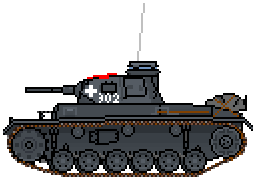
- StuG III ausf. F
- Train station, Stalingrad, Russia, USSR
- September 14th, 1942
- 2 Zug, StuGAbt 244, 113. ID, 6. Armee
- Oberwachtmeister Karl Pfründtner
Hero Blurb
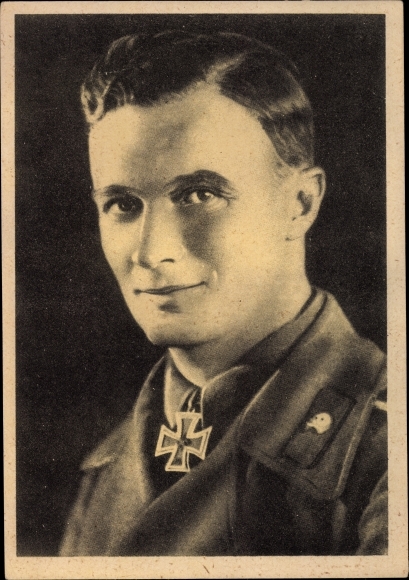
Some events of the Second World War have been thoroughly documented: Fall Gelb is studied to death, there's five thousand books on Overlord and we all know where Stalingrad is. Okay, was. But wars are also full of people who simply vanish - an unknown corpse pulled from a far-away lake, a name on a list that leads nowhere. Oberwachtmeister Karl Pfründtner was one of those people. He lived a whole life: he had parents, went to school, joined the army, invaded Russia. Then, poof. Gone. However, the Wehrmacht published "Death cards", celebrating the actions and virtues of good Nazi boys. (Think Pokemon, but different.) Karl's card somehow got sucked up by the Internet, and the Internet never forgets. The text on those cards tells the reader something good or brave that the soldier did before he died, and often, that's all we know about that man.
It says: "Oberwachtmeister Karl Pfründtner, geb. am 15.4.1912 in München, erhielt das Ritterkreuz am 10.9.1942, weil er als Zugführer in einer Sturmgeschütz-Abteilung beim Angriff auf den Don bei einem aus eigenem Entschluß durchgeführten Vorstoß innerhalb zwanzig Minuten 9 sowjetische Panzer abschoß und damit zur Bildung eines wichtigen Brückenkopfes entscheidend beitrug."
Strangely enough, different versions of this story exist: one from Die Deutsche Wochenschau Nr. 632 of October 1942, where he shot 10 Soviet tanks in 30 minutes, and one on social media and hobby forums, where he's awarded his medal on September 18th. No way to be 100% sure though, because this is all we know, and we can't ask. His unit was small, none of them survived and dead men tell no tales. However, from Iron Cross Brigade (Leaping Horseman Books) and a bit of looking at a map, we can guestimate what happened. His unit, StuG-Abteilung 244, was helping the 384. Infanterie-Division cross the Don, probably near Nizhny Akatov, about five kilometers south of Trekhostrovskaya. I expect that the Soviets counterattacked their bridgehead, Karl took the initiative and drove them off. For that, he received the Knight's Cross - I assume on September 10th, probably at Gumrak. He was probably wearing the thing when he drove into the hell of Stalingrad... but none of the following is certain, and we'll never know. So I'm making up a story. I'm sure it's going to be at least slightly wrong. Which is fine by me - I'm not a real historian. And good storytelling is better than two sentences and some recycled errors.
Dolchstoß
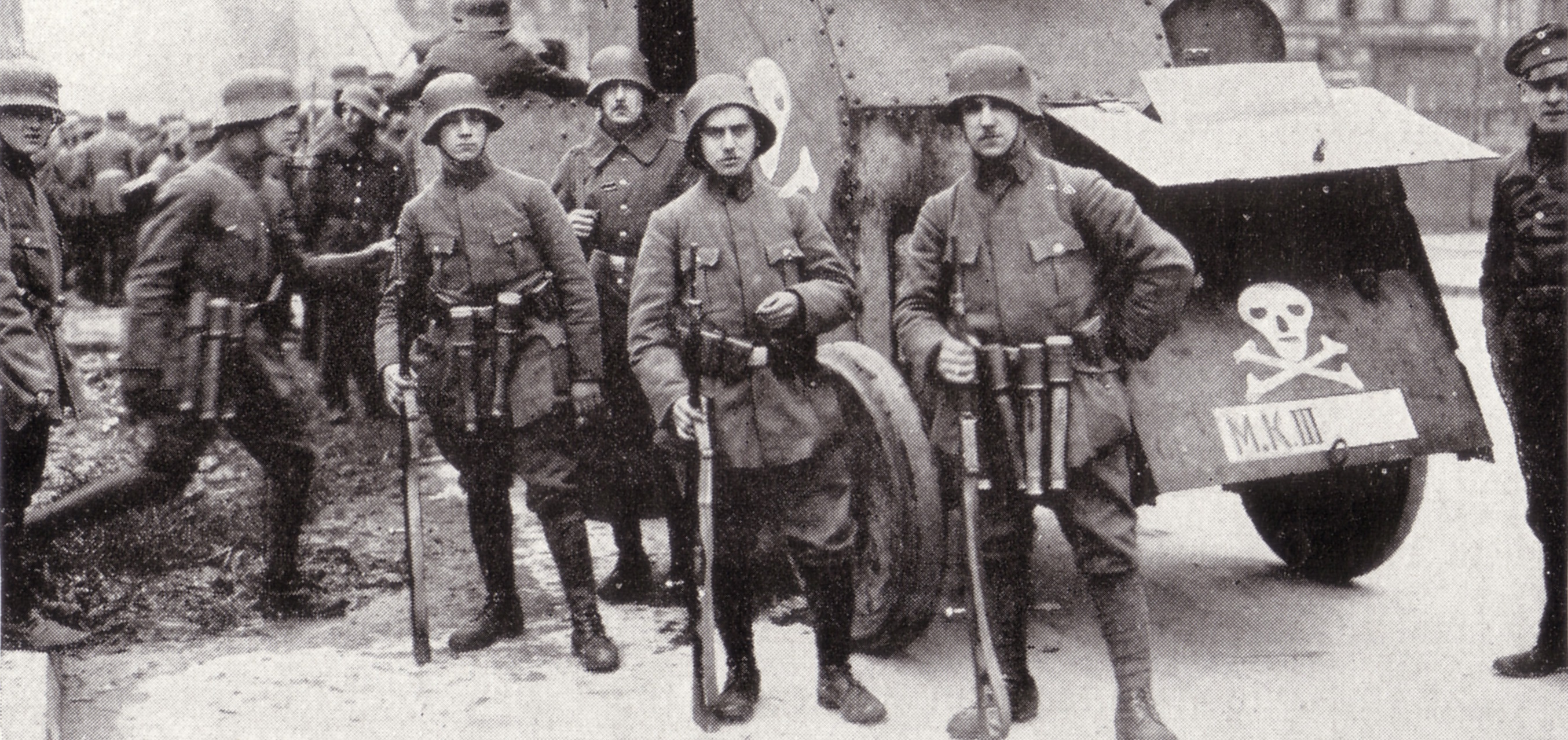
Karl was born in Munich in the year nineteen-twelve, just as the world was about to change. His parents (let's call them Heinrich and Käthe) had high hopes for their son, hoping he'd become a doctor or a celebrated pianist. But fate, as it often does, had other plans. Heinrich, his dad, was drafted to serve in the Great War. He didn't make it back, blown to pieces by a French seventy-five. Then the damned Englishmen threw up their blockade, and there was no more food. Like so many German civilians, Käthe, her boy and their country suffered for years and then they lost the war. Karl, who was only six at the time, just knew that he was hungry, and that his mother was sad. Later, he was sent to the Luitpold-Gymnasium, where he first heard the whispers of betrayal; Germany had not been defeated by superior Allied forces! No, instead, his friends informed him that the German Kaiser, and his armies, had been nefariously stabbed in the back by feeble politicians and treacherous Jews. Those same friends introduced him to the Hitlerjugend, where he found the security and structure he was missing at home. He joined the organisation and was swept up in the developing storm.
Like so many others, he wanted to be proud of his country, not to see it trampled beneath the boots of foreigners, or sold to evil Jews! Now it was time for Germany to shine, to stand up after the Versailles abuse. They needed to show the world that Germans were the best and strongest humans on our planet. He felt good about that, and about himself, which was something new after all these years of poverty and misery. No, this mister Hitler was going to make Germany great again, and Karl was going to do his bit! However, as Karl wasn't the toughest kid on the block, he didn't qualify for the elite SS or the Luftwaffe. But the Wehrmacht took him in, assigning him to an artillery regiment. And later, when someone had the bright idea of a turretless tank, a StuG, Karl found himself in one of those, rumbling across the battlefield.
Barbarossa
Karl no longer heard the rumble of the StuG's engine; it was just one of the sounds of this war. He'd been in the cramped vehicle all week, his eyes scanning the horizon for the enemy. The flat expanse of Ukrainian farmland stretching out before him, a vast, empty canvas waiting to be grooved by their tracks. Beside him was Heinz, his loader, nervously tapping the 75mm rounds for their short-barreled gun. In front was the driver, Franz, really still a boy. He gripped the steering levers, his eyes fixed on the field ahead. Their StuG-Abteilung - number 244 - was on the move, part of the spearhead of Operation Barbarossa, the massive invasion of the Soviet Union. The air was thick with anticipation, a mixture of excitement and fear. More than a month ago they had crossed the enemy border without fanfare. It was just a line on a map, an invisible barrier between two worlds. Now they rolled on, deeper into Soviet territory, the landscape growing more rugged, the forests denser, the villages more rustic.
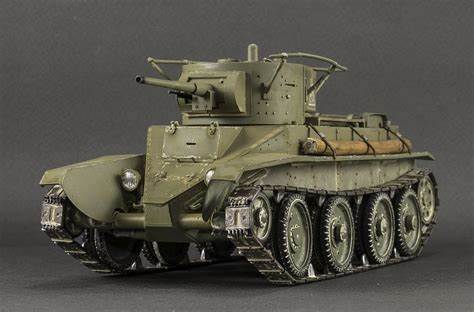
Then, a lone Soviet BT-5 tank suddenly popped out of the bushes, its turret swiveling towards them. As Karl's heart pounded in his chest, he barked orders at his gunner and driver. "Franz! Move left, quick!" and "Heinz! Feindpanzer at two o'clock! Load and..." BOOM! Heinz understood his business and sent a Panzergranate towards the Christie machine. The shell struck the Soviet's armor, leaving a smoking hole in its side. The Soviet tank lurched, its suspension slumped, and then the BT started burning with its crew trapped inside.
The Abteilung advanced further into the Soviet Union, pushing through scattered pockets of resistance, their trusty StuGs leading the charge. They captured villages, their inhabitants cowering in fear, their eyes wide with bewilderment. They took prisoners in the hundreds of thousands: Soviet soldiers surrendering without a fight, their faces sad and confused. At night, they camped under the stars, under the vehicle or on its engine deck if it was cold. They ate from the Gulaschkanone, their stomachs grumbling and their minds filled with the day's events. They talked of home, of their loved ones, and of the war that seemed to go along so nicely. Indeed, despite the hardships of combat, there was a sense of optimism, a belief that they were winning, that they were fighting for a just cause, as they crossed into Russia itself.
Kharkiv
Our German Sturmgeschütz crew had slept in their vehicle, to protect them from the icy October wind. Now, they were outside, inspecting their vehicle. The temperature had dropped overnight, and their Sturmgeschütz' road wheels were now frozen solid in the mud.
"Verdammt!" The driver kicked the rear sprocket, and immediately started hopping on the other foot. And cursing, a lot. "Fuck this shit! We're going NOWHERE in this thing!" He kicked, again.
"Now, Franz, you're not making your mother proud with that kind of language.", his commander said. "But maybe you're right about moving." Karl stood up and looked around him. His little microcosm was repeating itself all around him. His Abteilung was immobilised, frozen, stuck. Yesterday had already been bad, yesterday the mud was gloopy and thick. Now, it was solid.
"Boss?"
Karl looked up at Albert, his radio man, who was standing on top of their StuG. "What's up?"
"I can see Dormition cathedral from here. See?" He pointed. "That's the golden dome, right there."
Karl squinted in the morning sunlight, and he did see. Kharkiv was right there, ripe for the taking. Their Führer had been right.
"I do see, and all we have to do is kick the door in. Got to find a way to get this thing moving..." He looked from the StuG's muddy idler wheel up at Albert, just in time to see the man's head explode in a pink mist and gruesome splinters, closely followed by a distant BANG!
"Fuck! COVER!"
Karl's eyes were scanning the treeline, to the north. That was the only bit of cover so if he were the sniper, he'd shoot from there. No one - flash! Bang! Another soldier dropped - reacted too slow, and died as a result. Usually, Karl would swing his gun around and treat the bastard to a Kartätsche shell, but as his StuG was StucK, so that was not going to happen. Damn, he couldn't even drive away. Also damn, he was getting tainted by Franz' swearing. Mutti wasn't going to like that.
Karl didn't know yet, but they were in for a rough day. The second of what is now eight battles for that city had just started.
To the Volga!

A week later, Hitler received a strange message. German troops were retreating. RETREATING? Why? Well, for example, the commander of III Panzer Corps, von Mackensen, had reported several weeks earlier, before the last advance began, that his two divisions - the "Leibstandarte" and the 13th Panzer - were worn out, short on everything from socks to antifreeze, and down to half or two-thirds of their normal strength. Now, the unexpected Soviet winter offensive had forced them to fall back. This was impossible! However, after shouting at von Kleist and Dietrich, the LSSAH commander, Adolf seems to magically forget about what's going on. Suddenly, he was much more interested in next year's Grand Plan. It seems to me that he couldn't take the news that his troops weren't winning, and he just zoned out for the winter, leaving combat to the generals. Which, it must be said, was a good idea in the first place.
He had three options. Capturing Leningrad would be a massive blow to Soviet morale and mean the loss of a lot of heavy industry, but would have little other strategic value. Moscow was a harder target - that city should be fully ausradiert, which would severely mess with Soviet politics, organisation and communications, but German troops were exhausted after 1941's failed attempt and it was fanatically defended. Or, he could go for the southern oil fields at Maikop and Grozny. Denying oil to the Soviets would mean the end of their operations and help the German war effort - but such a deep penetration into enemy territory meant that flank attacks would be likely, and he'd need to protect those flanks somehow. His generals preferred a second attempt on Moscow, which is perfectly reasonable. It may also have turned into the same kind of meat grinder that Stalingrad was - we'll never know. Hitler, who only listened when it suited him, preferred the southern option. He reinforced Heeresgruppe Süd with units from the northern and central army groups and split it into two - one to take the oil, one to cover the flanks. Now find a map, find Voronezh, where Fall Blau started, and head south-east. What's the first major city you see? Right. Five hundred kilometers away. Stalingrad.
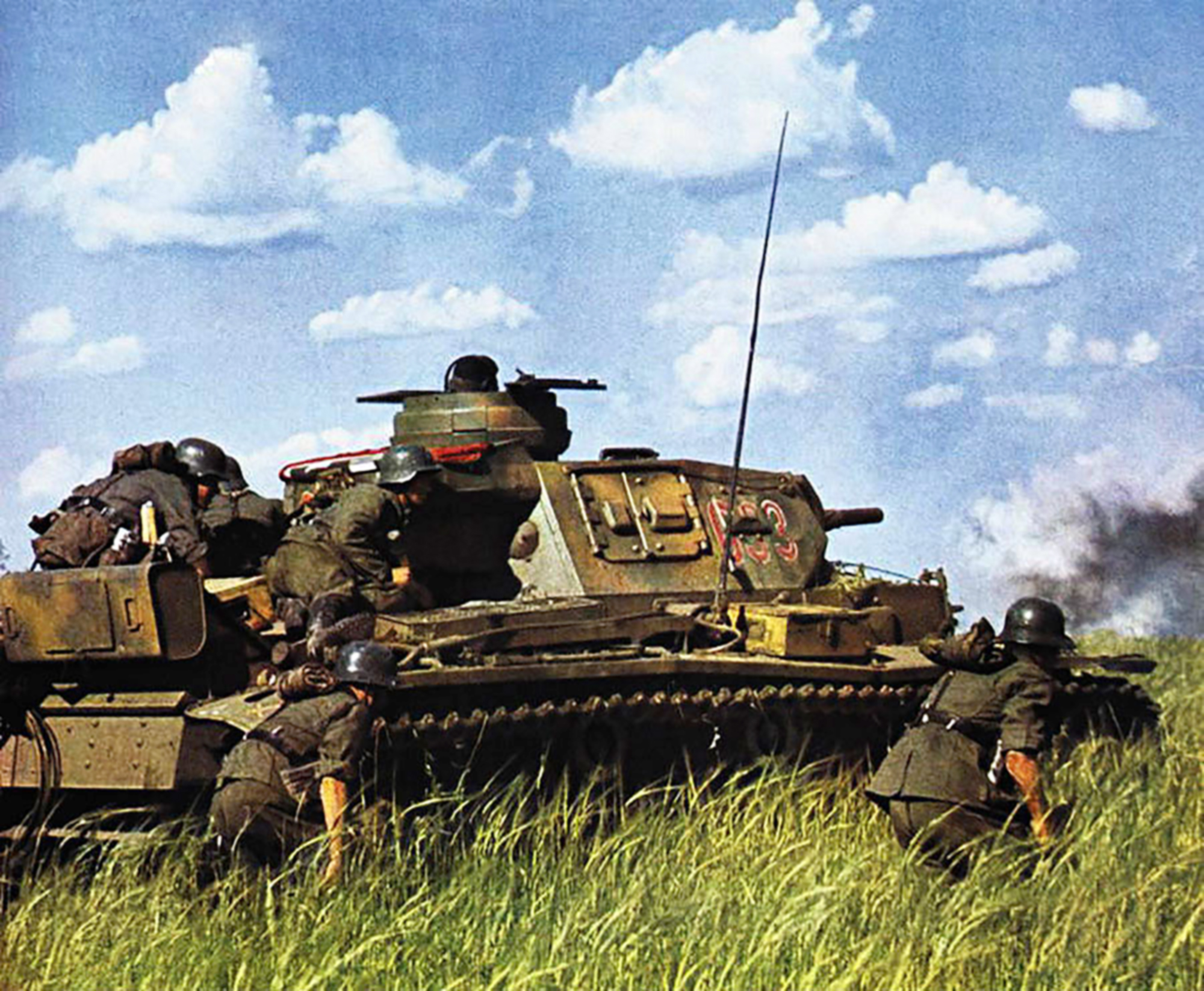
At the start of the operation, the Germans noticed something strange. Where previously the Soviets had been caught in massive encirclements and fought like headless chickens, they were now retreating in somewhat good order, trading space for time and dead Germans. Slowly, the German army found out that supply lines stop working after a thousand miles, that horses are not the answer, and that maybe - just maybe - the Soviets weren't completely useless sub-humans after all. The Wehrmacht was slowly being eaten away. The Soviets suffered far worse losses, but they had millions more men to spare, and as today, their leadership simply did not care. The envisioned Blitzkrieg-to-the-South became a violent slog, creeping forward in the summer heat - we see German soldiers advancing in their underwear. Soldiers, tanks and supplies were disappearing at an alarming rate. By the time they reached the Don, the German army was at about half strength, with Adolf seeing only unit counters and believing them to be at full. As in so many cases, and with 20/20 hindsight, this battle was decided before it even started.
But why was there even a battle? There were battles for Velikiye Luki, for Demyansk and for Rzhev - those are largely forgotten. Even the Battle for Berlin isn't universally remembered as the monumental clusterfuck that was Stalingrad. It's not like the city had much important industry, or critical bridges, or sat in the way of another important target. They could have ignored it, or encircled it like Leningrad. But it was called STALINgrad. We're talking dictators here - both Adolf and Josef. They just had to have the biggest dick, and both were fully prepared to sacrifice thousands of their own soldiers to prove it. I should add that Stalin's role in the Battle of Tsaritsyn - the town that would later bear his name - was rather unimpressive. He screwed up, black-marketed supplies, executed useful people, seriously dissed Trotsky, and was recalled. His biography notes that "in the countryside, he burned villages to intimidate the Russian peasantry into submission" - which tells you something about the kind of man he was.
After Rostov-on-Don fell to the Germans, Stalin issued Order No. 227: "Not one step back!" Anyone who retreated, soldier, woman or child, would be considered a traitor and shot. In Stalingrad this meant the civilian population - and a lot of refugees - was not allowed to evacuate, that soldiers could not make tactical retreats, and that the Volga was the end of the world. We'll never know how many mothers and children were killed - not only by Germans, but by Soviet artillery and carelessness. Only after the Luftwaffe had laid waste to the city did Stalin grudgingly allow the noncombatants to leave. Hitler likewise planned to kill the city and all its inhabitants. The two were more alike than either cared to admit.
Gulya
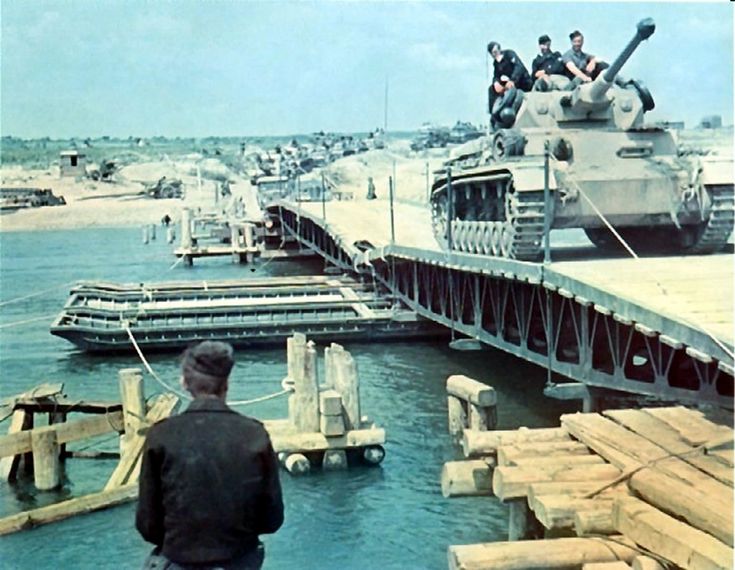
It's now the 15th of August and the front line in the Don bend runs roughly from Logovskii in the North to Malonabatovskiy in the South. The Germans had been pushing hard, costing them a lot of men and supplies, but their morale was good, even if it was still bloody hot. The Soviets, however, were on the verge of collapse. When German reserve units started leapfrogging forward, they punched through Soviet lines with ease, pushing them back tens or twenty kilometers. Soviet Guard units were ordered to attack, but their strength was diluted along the front line and their efforts went largely unnoticed. Well, that is, someone must have noticed that the Soviet 341st infantry division alone lost eight and a half thousand men...
Karl had found a good spot. His new StuG had a longer gun, and dead Albert was replaced by "the boy" Rüdiger. They were camping hull-down behind a slight rise in the ground, about five kilometers south of Podonokigrad, or whatever the damn village was called. No shops, no bars, no women, there was literally no one around but tired and hungry Wehrmacht men. Trekhostrovskaya, that was it, he saw on his staff map. Five houses, a barn and a dead horse. And a pig, which Franz shot and was now roasting over a fire. They crossed the Don yesterday, under heavy Soviet artillery fire. Heavy, but random. Now, they were covering the approach from the east bank, engine off, crew quiet. The pontoon bridge was holding. Ernst and his Sturmpioniere had done well, considering someone had been shooting at them the entire time. Karl was proud of them - the finest in German field engineering. Another huge shell dropped, way off target, only hurting the shrubbery. It had been like that for two days now. Soviet artillery, Soviet infantry probing the perimeter, the occasional aircraft. Nothing they couldn't handle. Karl's crew had settled into the rhythm of it - watch, wait, react. Franz had stopped swearing quite so much, which was either a sign of maturity or exhaustion. Probably exhaustion.
Twenty meters away, Marionella Koroleva - Gulya, everyone called her Gulya - was in a trench, doing what she'd been doing for forever now. She was dragging men out of places where men should not be left. Twenty years old, she'd been an actress since she was four, and she was furious. She had been furious since she volunteered as a nurse, and someone brought her half a baby to heal. She had been furious at the horde of Nazi goblins raping her country, so she picked up a rifle and left the hospital. Now, she had been fighting the bastards all day - she may have been a nurse, but nurses can kill too. The Fritzes had crossed the river, she and her friends tried to push them back. Yesterday, she nearly went too far, and they tried to take her alive. For what, she could imagine very well. But she escaped, crawled away through a trench and they shot at her with machine guns. But she crawled back, silently, and threw her grenade! She killed two of the bastards. Today, she was hunting one of the squat not-tanks, dug in behind the rise, its long gun pointed at her comrades, doing nothing, just sitting there. She picked up another grenade. Fascist swine. She threw it.
The grenade came from nowhere. It landed short, three meters in front of the hull, and the bang was more insult than injury. Karl's head snapped toward the sound. There - maybe forty meters away, in the tall grass to the right of the track - someone was moving. Low, fast, very deliberate. Not a soldier. Or rather, not what he expected a soldier to look like. She stood up for just a moment - to throw, he realised later - and that was when he saw her face. Young. Younger than Franz, maybe. Dark hair plastered to her forehead with sweat and river mud, but very beautiful. She was shouting something at him, something he couldn't make out over the ringing in his ears, but the tone was unmistakable. Something with 'mat'. Probably very insulting. He automatically swiveled his MG34 in her direction, and did nothing. He stared at her, and she stared back, her black eyes burning into his. His finger on the trigger, his mouth open, unable to move. She reminded him of something, and it took him a moment to place it. His mother, he thought. Not as she looked now, worn thin by years of worry and bad food, but as she must have looked once, before all of that. Before the blockade and the hunger and dad not coming home. He just watched her go, back into the grass, low and fast as she'd come.
"Boss?" said Rudi, from the driver's compartment. "Was that a woman?"
"Shut up." grumbled Karl.
He didn't mention it again. His crew, of course, made fun of him for the next three days.
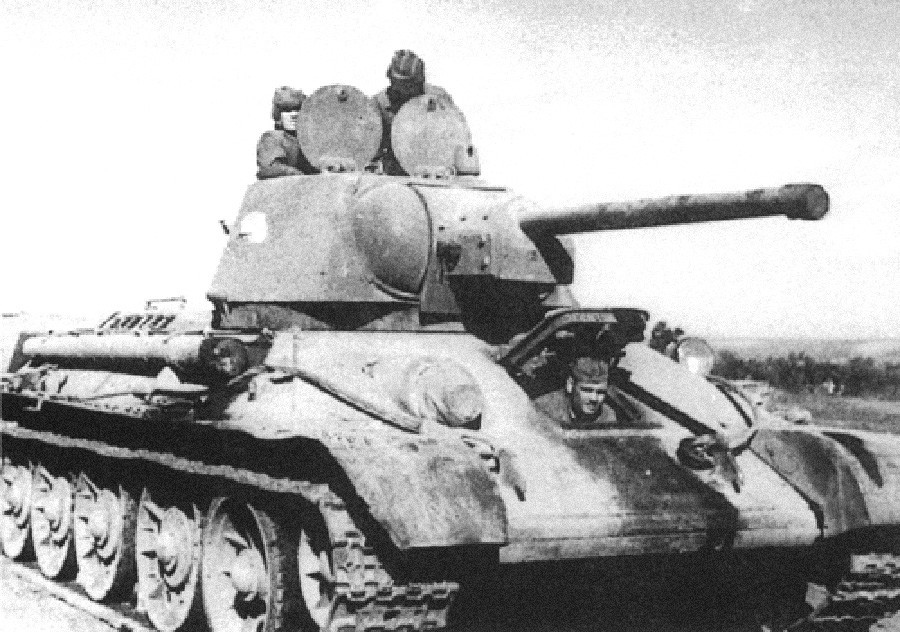
Then, suddenly, the Soviet 22nd Tank Division rushed in for the attack with their 28 radio-less Mickey Mouse T-34s, buttoned up and screaming "Urrah!". This is normal, because those early T-34s had a two-man turret crew, no cupola and no radio, meaning the commander was also the gunner and flag man. Soviet commanders had a lot to do, and a habit of getting their head shot off if they stuck it out of their tank. They never saw 244's assault guns. Karl's crew, in a good spot, still pissed about the grenade, killed nearly half of them.
In the North, however, Soviet forces continued to push at the German flanks, crossing the Don several times. This cost them around two hundred thousand (!) casualties, but weakened the Germans too, and kept them off balance. The Wehrmacht clearly had not secured the area, something they really needed to do before their attack on Stalingrad. That city was their final, definitive target; as far as I know, the German designs on Lebensraum ended at the Volga, at least, for this generation. They should just have taken the time to get their shit in order, but I guess Hitler was just not a patient man. He sent his already weakened forces towards the city, arriving there at the beginning of September.
The train station
Gumrak airfield is slightly higher than Stalingrad itself, but you can't see the city from there. Karl was leaning against his StuG, picking at his teeth with a wood splinter. He had a fresh Ritterkreuz, but toothpaste was a long time ago. His gums were bleeding. "Damn this, not enough vitamins.", he thought. "Just like at home." Home. His mother. So far away. Suddenly, he wanted to cry, but didn't. Tough Nazis don't cry. He was even beginning to doubt that he was a Nazi at all - he didn't really remember what the fuss was about. Here he was, two and a half thousand kilometers of mud and dust between him and his mother. His unit was still on loan, he hadn't spoken to his colonel in weeks. He didn't know what to do, or who to follow.
"Pfründtner?"
"Oberst...?"
"Roske, 194th Infantry. I need your help."
"Well, Oberst Roske, I need fuel and shells for my gun. Can we perhaps help each other?"
To the north, Hube's 16th Panzer had already pushed through the Soviet defences, reaching the Volga near Latoshinka. To the south, 14th Panzer was doing the same near Kuporosnoye, almost completely encircling the city. Karl's combat group was in the centre, pushing east along the Tsaritsa gorge. This greatly annoyed Yeryomenko, the Soviet commander, who ordered Chuikov to DO SOMETHING. Chuikov, who was actually being shot at, instead of safe in a HQ, never expected a counterattack to work. He just hoped to disrupt the enemy's plans. The enemy, in return, disrupted Chuikov's plans by bombing his kitchen. Hungry and tired, Chuikov was forced to move in darkness and under fire to his command post on Mamayev Kurgan, where there is now a very large statue of a lady with a sword.
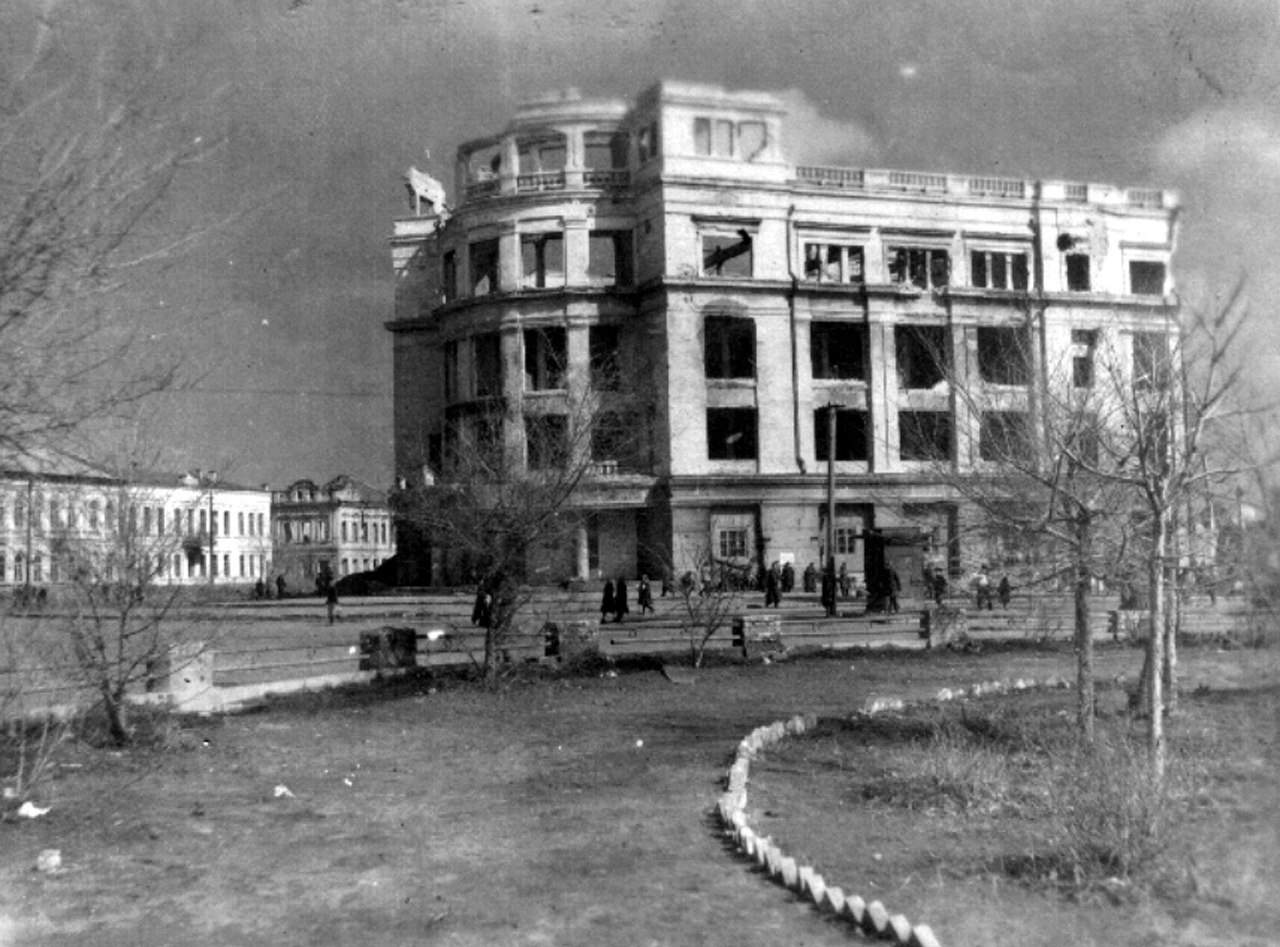
Early in the morning of September 13th, still in the dark, the Soviets attacked. Chuikov had been right - the Wehrmacht was unimpressed. They stopped the attack by dawn and chased the Soviets via the railway line towards the residential Zapolotnovksy district. Roske ordered his troops forward, supported by the StuGs and the Luftwaffe, to smash their way into the city. He wanted to reach the Volga embankment, where the ferries arrived from the east bank carrying soldiers and supplies. When they advanced into the workers' district, they were immediately hit with tube artillery and Katyusha rockets. The whole area was ablaze and many civilians died in the chaos. The Germans suffered too - unexpected grenades, invisible snipers, men disappearing around corners. But Roske still achieved the seemingly impossible, even with the disastrous "friendly fire" Stuka attack that wiped out one of his own companies: his men pushed past the Khorovod statue, past the station and the Univermag department store, towards the river, where they captured the House of the Specialists overlooking the Central Landing Pier.
"Roske had his command post beside the church. Paulus, Seydlitz and a few generals were already there. And they waited for me to come up and bring Volga water. And when I came up, they were quite disappointed that I had no frogs in my hands. Anyway, they were surprised that I didn't even have a bottle. I reported we cannot go down in daylight. As soon as we raise our noses above the high banks, bullets whizz around our ears. They were quite disappointed."
~ Gerhard Hindenlang, IR 191
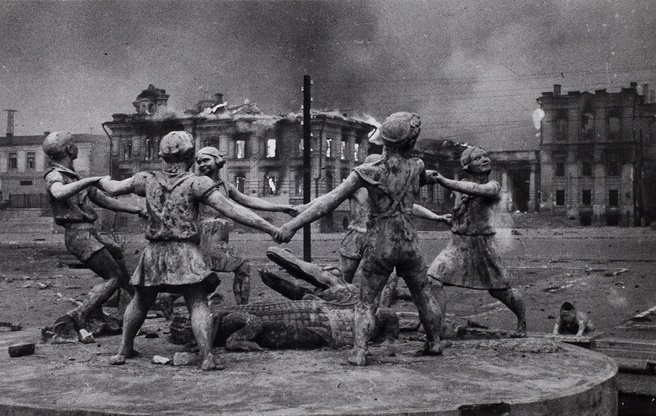
Chuikov, in his headquarters 800 metres further south, used everyone and everything he could find to stop them taking more of the city. There was much confusion: T-34s racing around, mortars and machine guns firing everywhere. A chaotic Soviet counterattack tried to retake the station. Karl's StuG was nearby, looking along Kursk Street, when a T-34 appeared from nowhere. His gunner squeezed off the pre-loaded AP round on instinct as it crossed his gun barrel. Smoke, fire, flying metal. The T-34's fuel tanks sat inside the crew compartment - which you might think is a problem, and it is. The commander came out burning, hit the ground rolling, and was shot by some dude with an MP-40. Karl was already moving, looking for the next target.
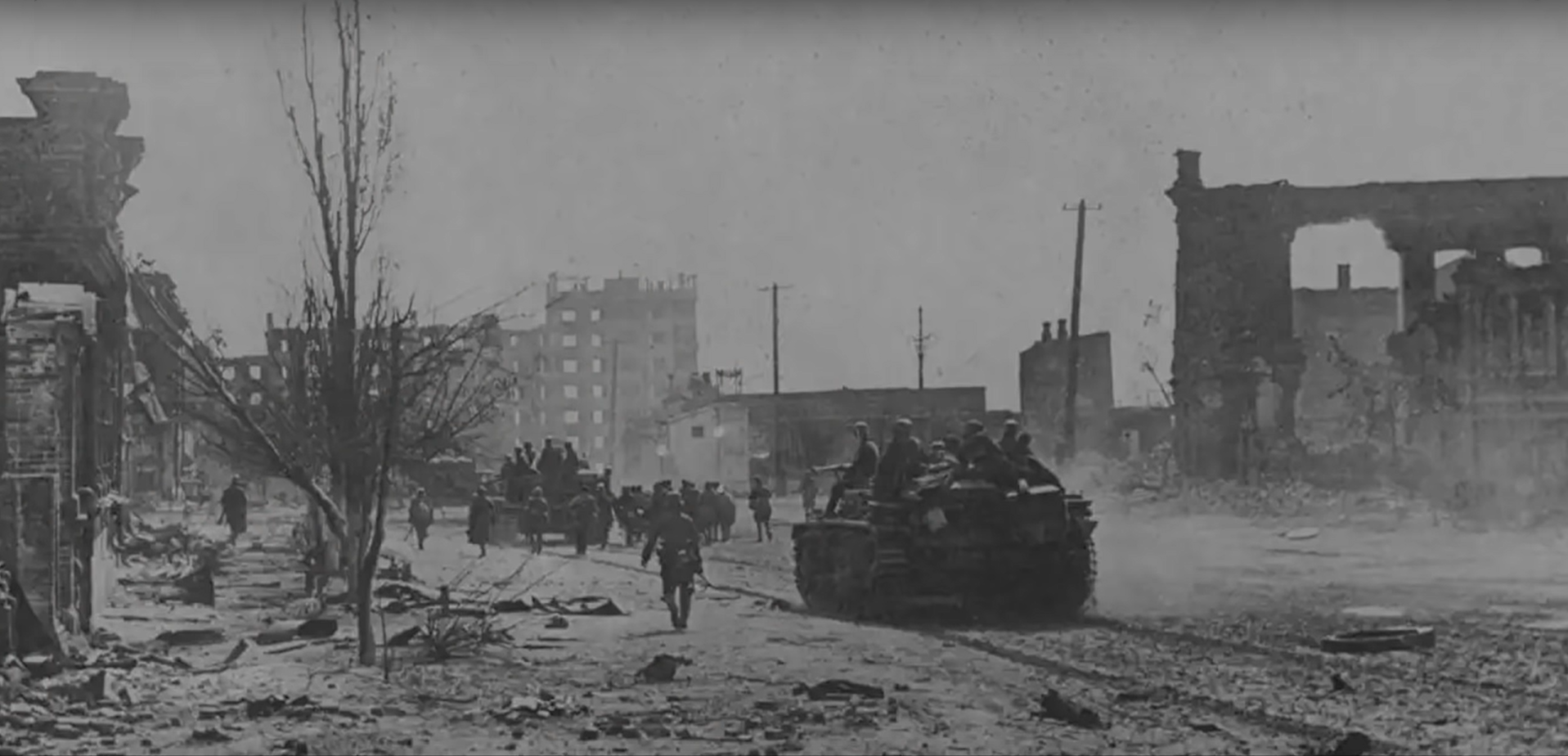
Within 24 hours, Roske and his men were fighting for their lives. Chuikov had pushed a fresh Guards division of 10,000 men across the Volga to retake the city centre. The Soviets retook the station and would keep it for the rest of the war. If there was ever a Marne moment in the Second World War, this was it - the furthest they would ever get, and most of the Germans here would never see home again. Karl seems to have been lucky. He was wounded on October 10th and evacuated by air, to a hospital somewhere behind the lines. Maybe he even made it home, and saw his mother. Let's hope so, because when he recovered he was sent back into action, and died in June 1944 during Operation Bagration, east of Bobruisk. He was 32 years old.
Biblio
- Stürmgeschutze: Armoured Assault Guns, Bob Carruthers
- Death of the Leaping Horseman, Jason Marks
- Iron Cross Brigade, Werner Gösel / Christian Bauermeister / Jason Mark (Leaping Horseman Books, 2016)
- WWII-Photos-Maps.com
- stalingrad.ru
- Moscow to Stalingrad: decision in the east, Earl Ziemke + Magna Bauer